
Renewable electricity,
water, and recycled CO₂.
e-NG explained
What is e-NG?
At a glance
Renewable power,
converted into a
ready-to-use molecule.
e-NG, electric natural gas, also referred to as e-methane, or synthetic methane, is a carbon-neutral synthetic gas. It is produced on the basis of renewable hydrogen and methanation with CO₂. The hydrogen and CO₂ are combined through the methanation process, which uses a catalyst to convert the two feedstocks into methane. e-NG is chemically indistinguishable from conventional natural gas that is globally traded and consumed today.
This combination brings renewable electricity into energy systems and applications that need a dense, storable, and globally transportable fuel.
CH4
Electrolysis followed by
methanation.
A methane molecule ready
for storage, transport, and
use.
From renewable power
to the gas grid.
How it works
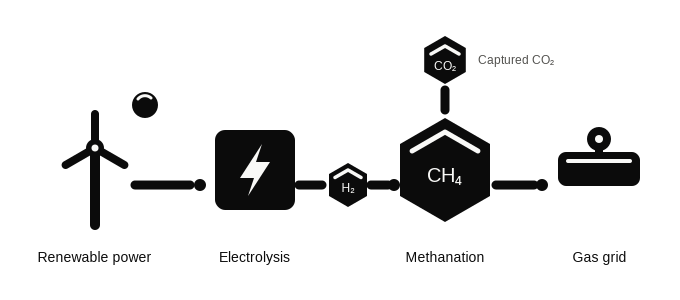
Carbon capture, electrolysis, and methanation
connect renewable power with a methane molecule
ready for existing energy systems.
Gas processing infrastructure
Renewable electricity
Power from renewable sources such as wind, solar, and hydropower provides the energy for the process.
Renewable powerElectrolysis
Renewable electricity splits water into hydrogen (H₂) and oxygen, converting electrical energy into a molecular form.
Renewable H₂CO₂ capture
Carbon is captured from eligible industrial, biogenic, or direct-air sources for reuse as a feedstock.
Recycled carbonMethanation
Renewable hydrogen and captured CO₂ are combined to produce synthetic methane and water.
H₂ + CO₂ → CH₄ + H₂OStorage, transport & use
The resulting e-NG can enter gas networks, storage, liquefaction, distribution, and end-use systems.
Ready-to-use e-NGLeading and proven technologies
Three technologies at the
core of e-NG production.
e-NG brings together technologies and processes with established industrial foundations.
CO₂
01
Carbon capture
Carbon capture is a proven family of technologies that separates CO₂ before it reaches the atmosphere. The captured carbon can be stored underground or used as a feedstock for fuels, chemicals, and other products - including e-NG.
Different configurations are available for different industrial processes, including post-combustion capture, pre-combustion capture, and oxy-fuel combustion. Direct Air Capture follows a different route by extracting CO₂ directly from ambient air. Because it is not tied to a specific emission source, DAC can offer greater flexibility in where carbon is captured and used, although its energy needs and operating conditions must also be considered.
For e-NG, the origin of the captured CO₂ and the rules used to account for it are central to lifecycle emissions and renewable-fuel status.
H₂
02
Electrolysis
Electrolysis uses electricity to split water into hydrogen and oxygen. When powered by renewable electricity, the process produces renewable hydrogen - the energy-carrying input used in e-NG production.
Several electrolyzer technologies are available. Alkaline electrolysis has operated for decades and is commercially proven, while Proton Exchange Membrane (PEM) systems have reached commercial deployment and respond flexibly to variable renewable power. Other technologies, including solid-oxide electrolysis, continue to develop. By creating a large potential market for renewable hydrogen, e-NG can support the scale-up of electrolyzer manufacturing and contribute to future cost reductions.
Electrolysis converts renewable power into hydrogen that can be stored, transported, and combined with captured CO₂.
CH₄
03
Methanation
Methanation reacts hydrogen with carbon dioxide to produce synthetic methane (CH₄) and water. The catalytic pathway is based on the Sabatier reaction, developed by Nobel Prize-winning French chemist Paul Sabatier in the early twentieth century.
The production of synthetic natural gas through methanation has been studied since the 1970s, while related catalytic steps have long been used in gas-processing and ammonia-production systems. Today, both catalytic and biological methanation routes are available. Careful reactor design and heat integration can improve overall system efficiency by recovering useful heat generated during the reaction.
The resulting methane molecule is chemically indistinguishable from conventional natural gas and can use much of the same infrastructure.
System ready
Designed to work with
infrastructure already in place.
Because e-NG is methane, it can move through much of the same chain used for natural gas today. That creates a faster route from renewable production to established markets while preserving the value of suitable existing assets.
One compatible molecule.Five established infrastructure touchpoints.
Compatibility remains subject to local gas-quality, safety, sustainability, and certification requirements.01
TransportPipelines
→02
BalanceGas storage
→03
Global movementLNG terminals
→04
DeliveryDistribution
→05
UseEnd-use equipment
Value chain
The full e-NG value chain.
e-NG connects renewable power generation, industrial chemistry, and gas infrastructure. It is particularly relevant where existing gas infrastructure creates system value and where methane compatibility, seasonal storage, or global transportability matter.
01 Produce02 Move03 Use
Produce01
Renewable energy generation
Wind, solar, and hydropower supply the electricity that drives the process. Renewable sourcing and plant operation strongly influence lifecycle performance.
→Produce02
Hydrogen production
Electrolyzers turn renewable electricity and water into hydrogen. Scale, efficiency, and operating profile are important levers for cost and emissions.
→Produce03
CO₂ capture and supply
Industrial, biogenic, and direct-air sources can provide the carbon feedstock, subject to the applicable accounting and certification framework.
→Produce04
Methanation
Hydrogen and CO₂ react to form synthetic methane and water. Recovering useful heat can improve overall energy use.
→Move05
Storage, liquefaction and transport
e-NG can be stored in gas facilities or liquefied for long-distance transport using established gas and LNG infrastructure.
→Move06
Grid injection and distribution
Once it meets quality and safety standards, e-NG can move through transmission and distribution networks to demand centers.
→Use07
End use
Because it is methane, e-NG can serve many existing gas applications, especially where electrification is difficult or seasonal storage is valuable.
Use cases
Where e-NG can make a difference.
e-NG is particularly relevant in sectors where direct electrification is technically complex, costly, or constrained by process or infrastructure requirements. In addition, Liquefied e-NG can connect renewable production regions with established demand centers.
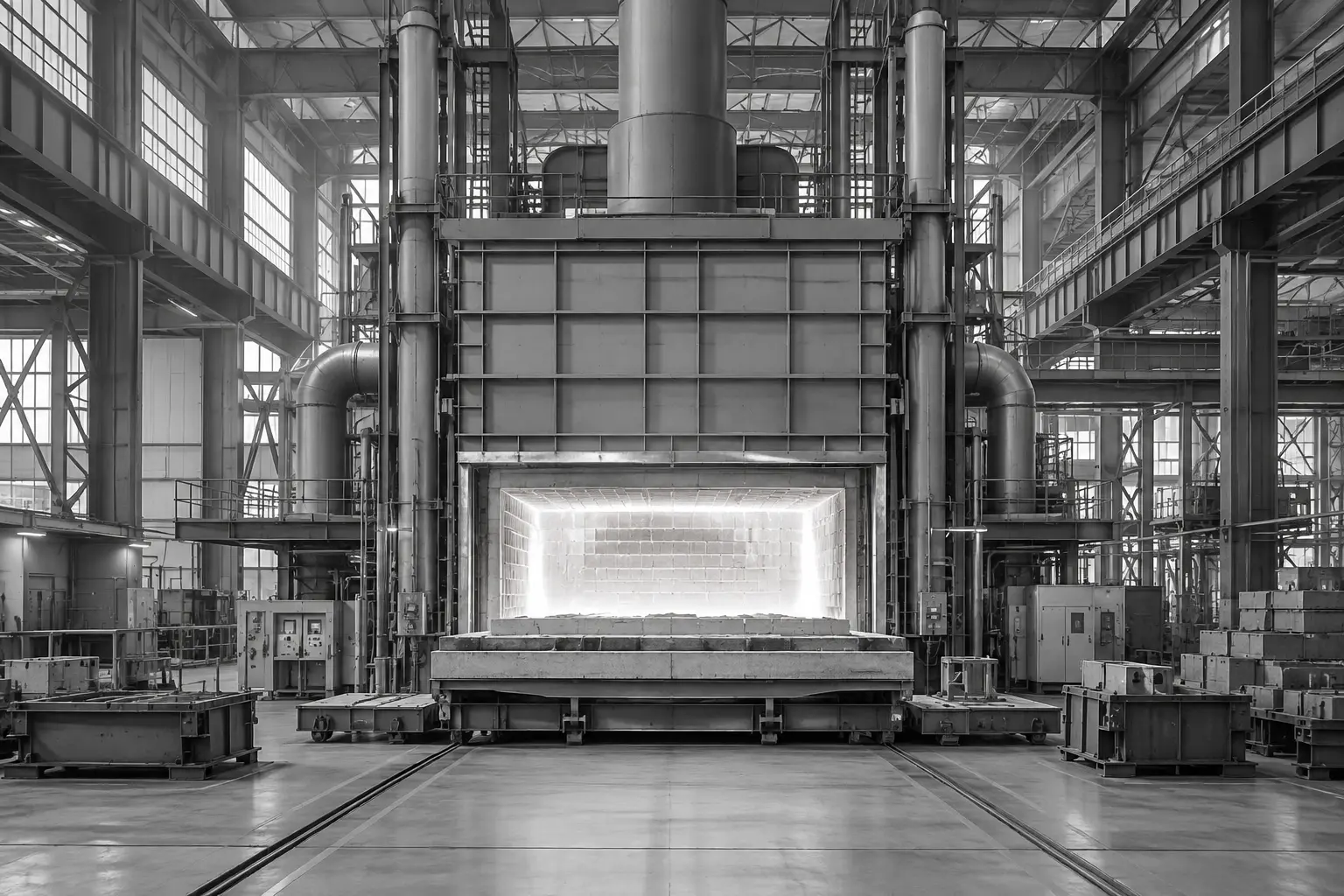
INDIndustrial heat01
High-temperature processes where electrification is constrained
Cement, steel, glass, and ceramics require high-temperature process heat where direct electrification can be technically complex or costly. e-NG offers an infrastructure-compatible option, subject to certification and lifecycle accounting.
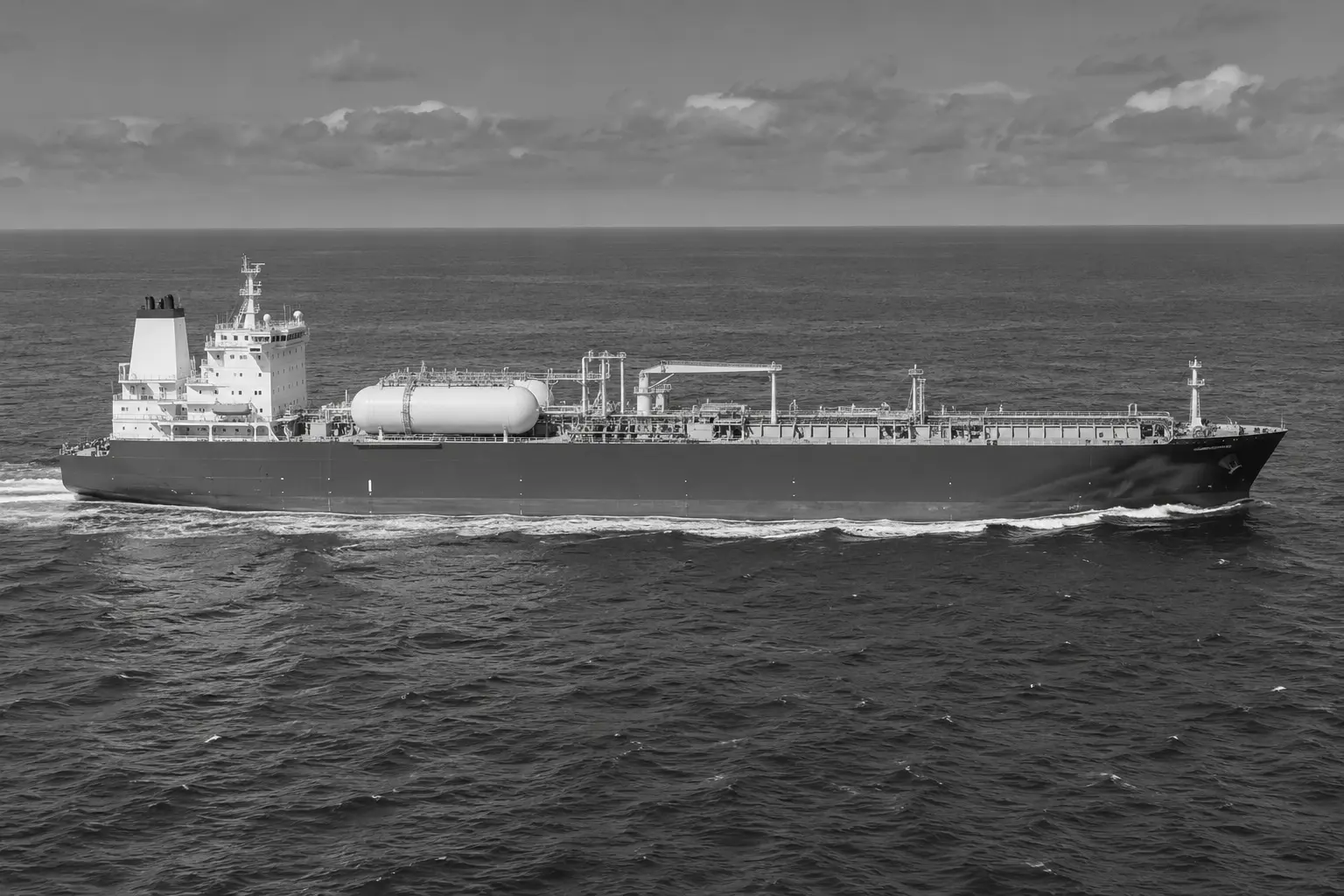
SEAMaritime shipping02
Liquefied e-NG as a lower-GHG marine fuel
LNG-capable vessels can potentially use liquefied e-NG with limited modifications, subject to fuel quality and certification requirements.

HOMEBuilding heating03
Selected contexts where direct electrification is constrained
e-NG may play a role in selected existing gas-grid contexts, backup applications, or hybrid systems. In many new-build and renovation contexts, direct electrification remains more efficient.
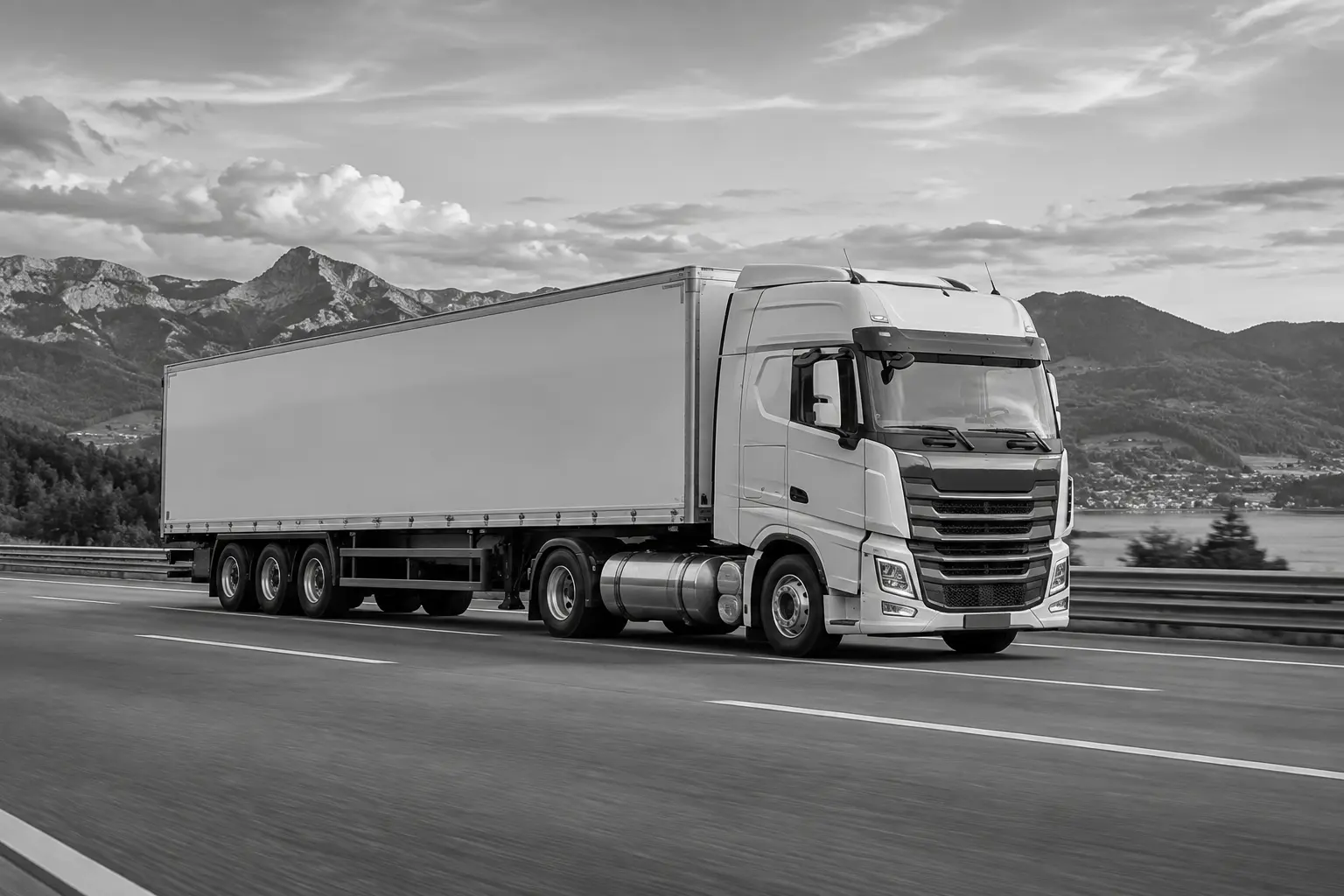
ROADHeavy transport04
CNG and LNG vehicles using lower-GHG methane
Existing CNG and LNG heavy vehicles can use e-NG, subject to fuel quality requirements and verified lifecycle emissions performance.
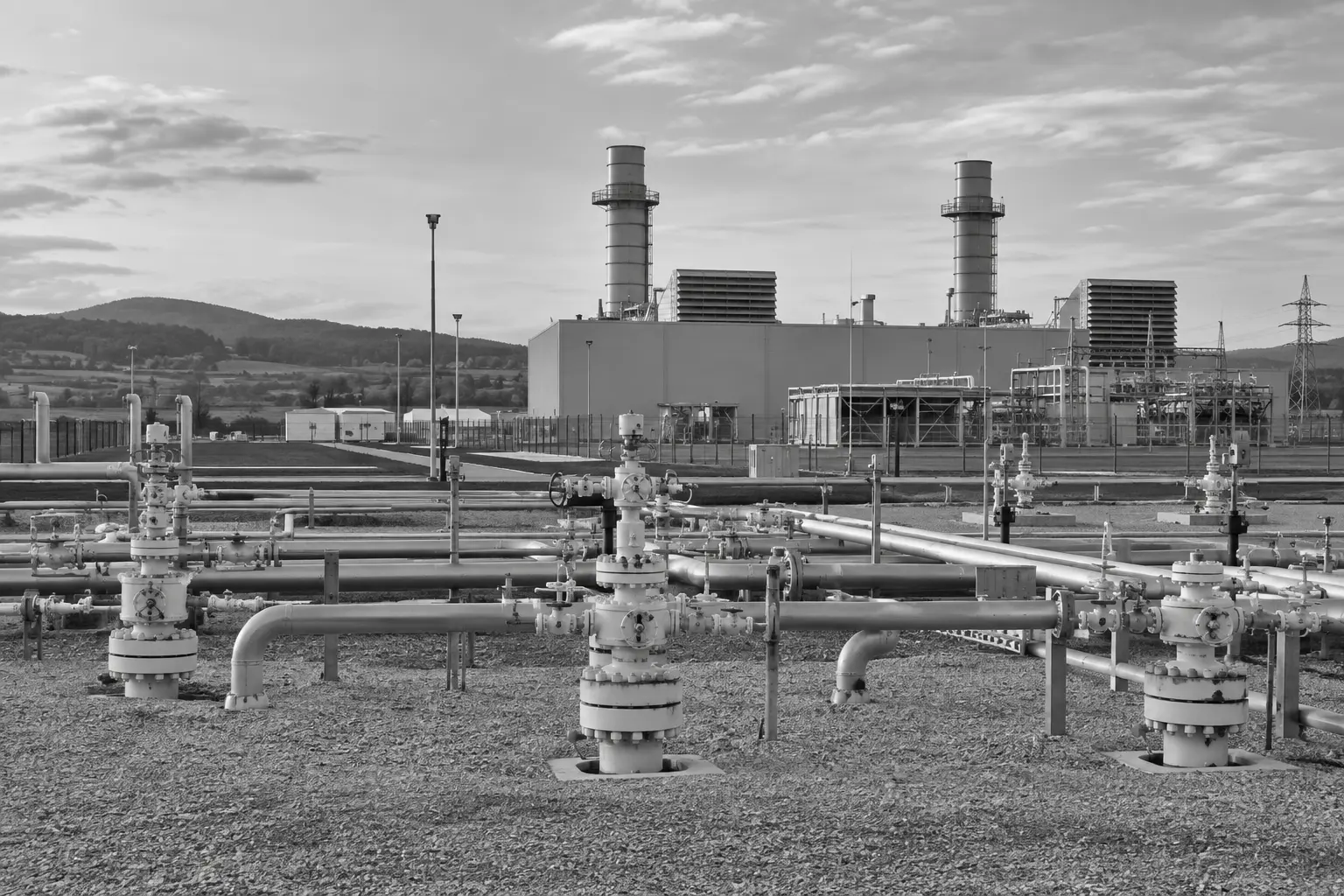
GRIDPower and grid balancing05
Long-duration seasonal storage
Renewable electricity surpluses can be converted into e-NG and held in existing gas storage for weeks or months before being used when energy is needed.
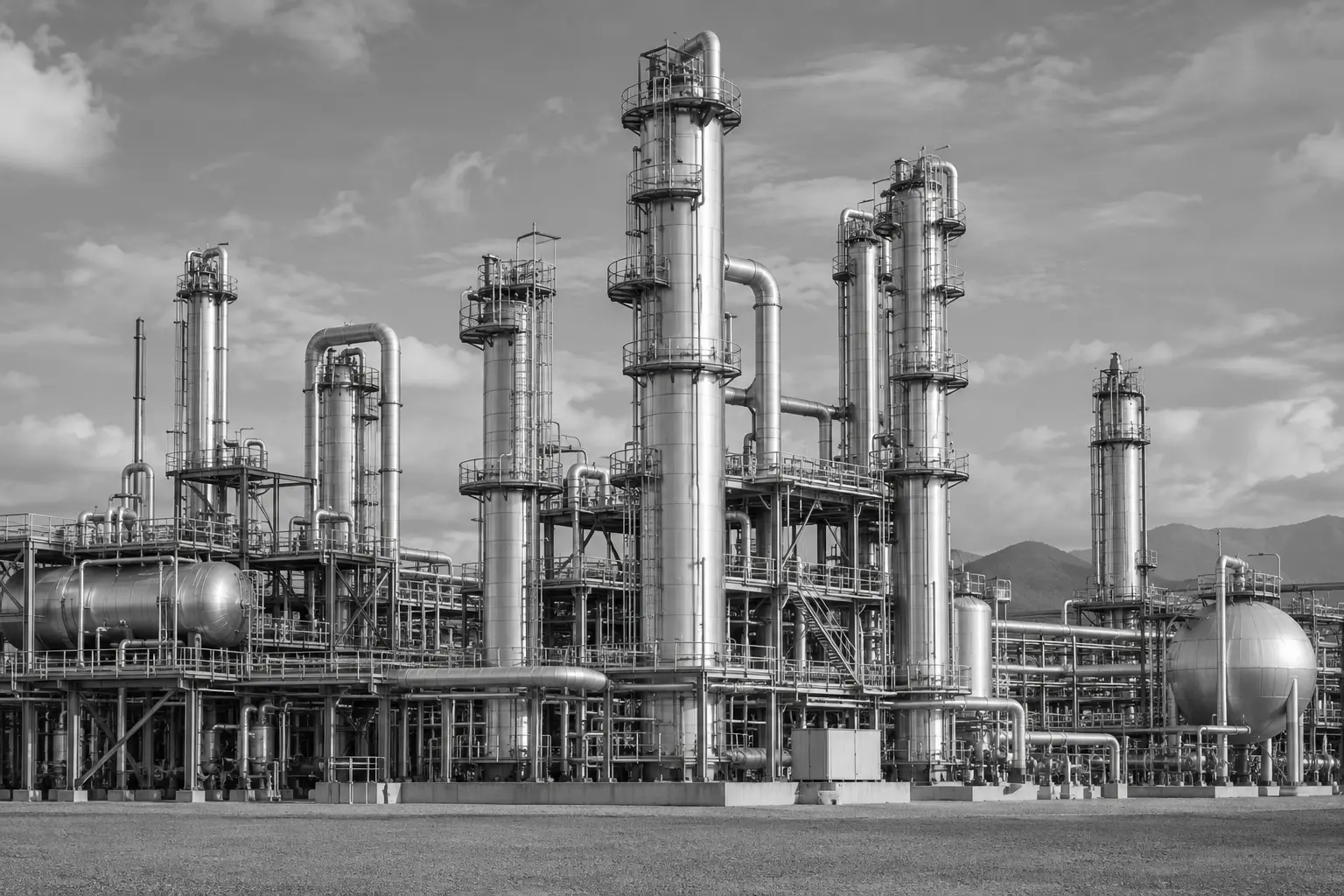
CHEMChemical feedstock06
Renewable feedstock for chemical production
Chemical and fertilizer production uses methane as both an energy input and process feedstock. e-NG can provide a compatible renewable substitute.

Why e-NG
The key advantages
of e-NG.
e-NG is most valuable where molecule-based energy, long-duration storage, global transport, or compatibility with existing gas systems can complement direct electrification.
Infrastructure compatibility
e-NG can use much of today's gas transport, storage, distribution, and end-use infrastructure, limiting the need to replace an entire downstream system.
Renewable energy integration
Power-to-gas converts renewable electricity into a molecule that can be stored for long periods and used when and where energy is needed.
Global transportability
Production can take place in regions with abundant renewable resources, while pipelines and LNG supply chains can connect that energy to demand centers.
Carbon circularity
With renewable hydrogen, an eligible CO₂ source, and robust lifecycle accounting, e-NG can recycle carbon already in circulation rather than introduce new fossil carbon.
Hard-to-abate applications
A methane-compatible renewable fuel can support high-temperature industry, maritime and heavy transport, dispatchable power, and chemical production.
Whole-system value
Reusing established assets and end-user equipment can reduce downstream conversion needs, transition time, and system costs in suitable applications.
Q&A
Understanding e-NG.
Clear answers to the most common questions about how e-NG is produced, why it can use existing infrastructure, and where it can contribute to the energy transition.
01How does renewable electricity become e-NG?
e-NG, or electric natural gas, is also known as e-methane or synthetic methane. It is produced from renewable hydrogen and recycled carbon dioxide (CO₂). The resulting molecule is methane (CH₄) and is chemically indistinguishable from conventional natural gas. Its lifecycle climate performance depends on the renewable electricity, carbon source, production process, transport, and methane emissions across the supply chain.
02How is e-NG produced from renewable power?
The production of e-NG begins with renewable electricity, which powers electrolysis to produce renewable hydrogen. This hydrogen is then combined with recycled CO₂ through methanation, producing e-NG.
The recycled carbon may come from captured industrial processes, biogenic CO₂ from organic material, or CO₂ captured directly from the atmosphere through Direct Air Capture. The eligibility and climate value of each source depend on the applicable lifecycle accounting and certification rules.
03What are the three core technologies involved, and why rely on proven processes?
e-NG production brings together three leading and established technologies:
- Carbon capture separates CO₂ from industrial, biogenic, or atmospheric sources so it can be reused as an e-NG feedstock.
- Electrolysis uses renewable electricity to split water into hydrogen and oxygen, converting electricity into an energy carrier that is easier to store and transport.
- Methanation combines renewable hydrogen and recycled CO₂, typically using a catalyst or biological process, to produce synthetic methane (CH₄).
04Why is e-NG considered system ready today?
Because e-NG is chemically equivalent to natural gas, it can use much of the existing gas system, including pipelines, storage facilities, LNG terminals, distribution networks, and end-use equipment. This gives it access to established markets and can support economies of scale as carbon capture, renewable hydrogen, and methanation technologies expand. Compatibility remains subject to local gas-quality, safety, sustainability, and certification requirements.
05How can e-NG deliver faster emissions reductions than other solutions?
e-NG can offer a faster route to emissions reductions in suitable applications because it can use much of the infrastructure already built for natural gas. Unlike pure hydrogen and some hydrogen derivatives, it may not require an entirely new downstream transport, storage, distribution, and end-use system.
This can help renewable energy reach households, industry, power generation, and transport applications already served by gas. The actual emissions benefit must be demonstrated through robust lifecycle accounting.
06How can e-NG help major markets reach their 2030 and 2050 targets?
Natural gas currently complements variable renewable power generation in many regions. By converting renewable electricity into a transportable and storable molecule, e-NG can help integrate more renewable energy into both production and consumption. It can therefore support the wider deployment of renewable power and contribute to climate ambitions in the European Union, the United States, Japan, and other major markets.
07How can e-NG maximize energy use across the value chain?
With effective heat integration, e-NG systems can make use of energy that would otherwise be lost during production. Across the value chain, e-NG can achieve competitive thermodynamic performance compared with liquefied hydrogen and certain other hydrogen derivatives, depending on system design and how useful heat is recovered.
Its high volumetric energy density, compatibility with existing gas networks, and direct usability at the end-user site can also reduce the conversion steps and infrastructure changes required for some alternative energy carriers.
08What makes e-NG cost-competitive from initial production to final end use?
The economic value of e-NG becomes clearer when costs are considered across the entire value chain. In addition to production-site costs, this includes transport, storage, distribution, downstream infrastructure investment, and the time required for a new energy carrier to reach the market.
Reusing suitable gas infrastructure and end-user equipment can avoid some of the additional upgrades required by pure hydrogen and other derivatives. As deployment grows, further cost reductions are expected across renewable electricity, carbon capture, electrolysis, and methanation.
09How does e-NG help decarbonize heavy industries?
e-NG can be used in many applications currently served by natural gas, making it a potential option for hard-to-abate sectors where direct electrification is technically complex or costly. These include high-temperature processes in steel, cement, glass, and ceramics, as well as long-distance road transport and maritime shipping.
10Is e-NG the same as biomethane or biogas?
No. e-NG is produced synthetically from renewable hydrogen and captured CO₂, while biomethane and biogas are produced from biological feedstocks. Because all three contain methane, they can share parts of the same infrastructure, subject to applicable quality and certification requirements.
11What determines whether e-NG qualifies as a renewable fuel?
Requirements vary by market. They commonly address renewable electricity sourcing, hydrogen production, eligible CO₂ sources, lifecycle greenhouse-gas performance, chain of custody, and certification. Meeting these rules is essential for market access and credible environmental claims.
12When will e-NG be commercially available at scale?
Projects are advancing around the world, from pilot facilities to large-scale developments. The pace of deployment will depend on production cost reductions, access to renewable electricity and eligible CO₂, clear certification rules, infrastructure access, and durable demand signals.
Membership
Help shape the future of e-NG.
Join companies across the e-NG value chain working to advance credible policy, certification and market development worldwide.
Explore membership ↗